

First UAE-made commercial AI satellite takes flight from Dubai with Emirates SkyCargo
Satellite features optical, infrared, thermal and RF sensing with onboard AI processing
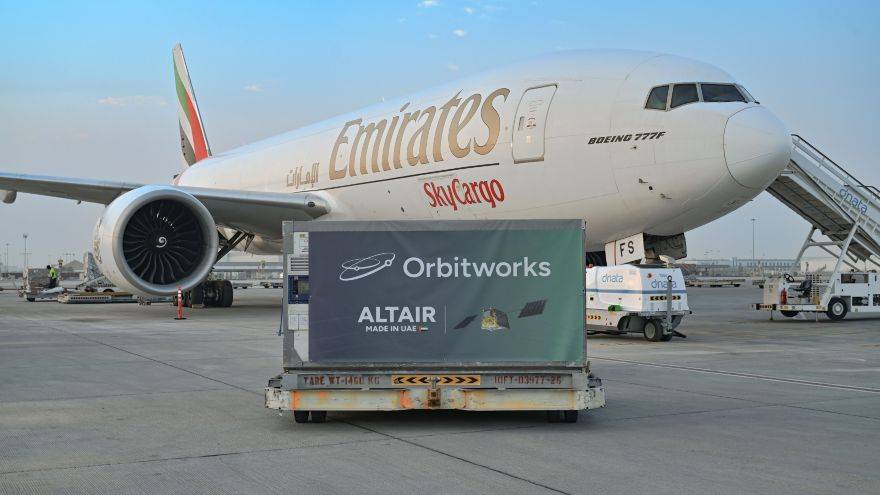
DUBAI – Emirates SkyCargo has transported Altair-1, the UAE’s first commercial AI-enabled Earth observation satellite, from Dubai to Los Angeles ahead of its scheduled launch in October 2026.
The satellite, developed and manufactured in the UAE by Orbitworks, was carried aboard an Emirates SkyCargo Boeing 777 freighter from Dubai World Central (DWC) to Los Angeles International Airport (LAX). The shipment marks a significant step for the UAE’s commercial space sector as Orbitworks prepares to place the first satellite in its planned Altair constellation into orbit.
Altair-1 is the first of 10 satellites that will make up the Altair constellation, a multi-sensor system designed to provide analysis-ready intelligence for a range of applications. The constellation combines optical, infrared, thermal and radio-frequency (RF) sensing capabilities with onboard artificial intelligence processing, allowing data to be processed using advanced technology integrated into the satellite system.
Advanced satellite
Orbitworks has developed Altair as an Earth observation constellation with advanced imaging payloads, an optimised orbital design, frequent revisit rates and consistent data acquisition. The system is intended to support applications including environmental monitoring, disaster response, land and coastal-use analysis, maritime domain awareness, and the assessment of resources and infrastructure.
The company said the combination of multiple sensing technologies and onboard AI processing is designed to provide intelligence that can be used across different Earth observation requirements. Altair-1 will begin its mission after its planned launch in October, with the remaining satellites forming the wider constellation.
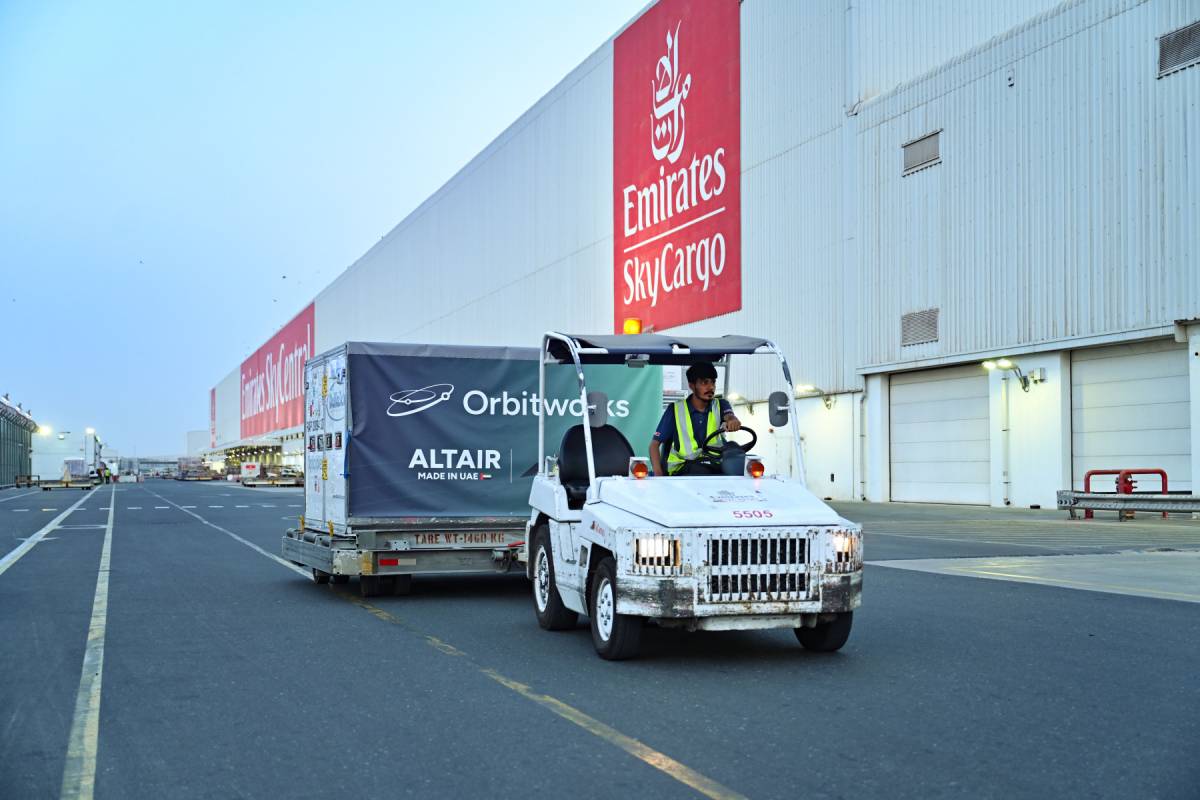
The journey from Dubai to Los Angeles was handled by a dedicated Emirates SkyCargo team under its Aerospace and Engineering vertical, which provides specialised solutions for sensitive and technologically advanced cargo. The carrier said the team managed the end-to-end movement of Altair-1, maintaining rigorous environmental and safety controls throughout the transportation process and delivering the satellite on schedule.
Badr Abbas, Divisional Senior Vice President at Emirates SkyCargo, said the carrier was proud to support Orbitworks during a significant stage in the satellite's development and highlighted the expertise required to move highly sensitive aerospace equipment.
The transport also demonstrates the role of specialised air cargo services in supporting international aerospace operations, particularly when space hardware needs to be moved between manufacturing locations and launch facilities.
Space logistics
Emirates SkyCargo has transported satellites and other specialised aerospace equipment on several occasions. Its recent shipments include Arab Satellite 813, which was flown from Dubai to its launch site near Shanghai in China.
In 2018, Emirates SkyCargo transported Khalifasat from Dubai to South Korea, marking the movement of the first satellite developed and built by UAE engineers. Khalifasat was manufactured by engineers at the Mohammed Bin Rashid Space Centre and represented an earlier milestone in the country's development of indigenous satellite capabilities.
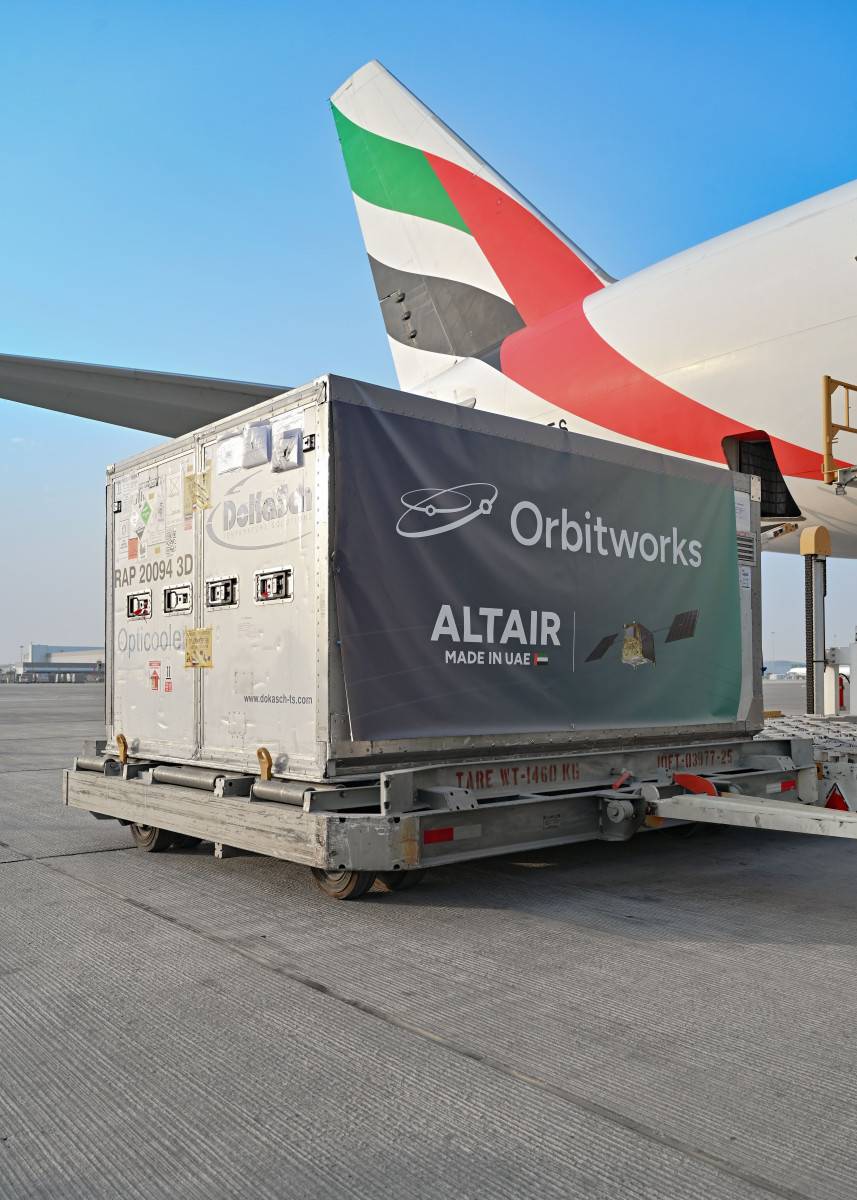
The carrier's Aerospace and Engineering product has since become one of the fastest-growing specialised verticals in its portfolio. Emirates SkyCargo said it has moved more than 6,000 tonnes of aerospace and advanced engineering cargo around the world in 2026.
The Altair-1 shipment adds a new UAE-built spacecraft to that portfolio and links the country's growing satellite manufacturing capabilities with international launch infrastructure.
Emirates SkyCargo network
The satellite flight comes as Emirates SkyCargo continues an expansion of its freighter fleet and global network. Since March 2026, the carrier has taken delivery of six Boeing 777-F production freighters and one Boeing 777-300ERSF converted from an Emirates passenger aircraft.
A further four Boeing 777-F production freighters and one additional converted freighter are scheduled to join the fleet later this year. The additional aircraft have supported the expansion of Emirates SkyCargo's global freighter network to more than 60 destinations.
The expanded fleet gives customers access to additional main-deck cargo capacity while providing greater flexibility for shipments moving through international supply chains. For specialised cargo such as satellites and aerospace equipment, dedicated freighter capacity can support movements requiring controlled handling and carefully managed transportation conditions.
Emirates SkyCargo operates through its Dubai hub and connects cargo destinations across six continents. Its network serves more than 150 destinations, with cargo carried on Emirates' widebody fleet of Boeing 777, Airbus A380 and Airbus A350 aircraft, alongside dedicated Boeing 777-F and Boeing 777-300ERSF freighters.
Altair-1
For Orbitworks, the transportation of Altair-1 brings the first commercial satellite in its planned constellation from its UAE manufacturing base to the United States, where it is now positioned ahead of its October launch.
Schahan Sediqi, General Manager of Orbitworks, said the satellite represented the work of the company's team and a milestone for its ambitions in the UAE space sector. He also credited Emirates SkyCargo with safely moving the spacecraft from Dubai to Los Angeles.
Orbitworks was established in 2024 and is based in Khalifa Economic Zones Abu Dhabi (KEZAD Group). The company describes itself as a UAE-based satellite manufacturing and space services company focused on cost-effective, high-performance space systems.
Orbitworks was formed through a strategic partnership between Abu Dhabi-based Marlan Space and San Francisco-headquartered Loft Orbital. The company is the Middle East's first commercial satellite manufacturer and focuses on satellite platforms, constellations and Earth observation services designed around different mission requirements.
With Altair-1 now in Los Angeles, attention turns to its scheduled launch in October 2026, when the satellite is expected to begin its Earth observation mission as the first spacecraft in the 10-satellite Altair constellation.